Summary Report of Hours Spent Writing in 2020 - KatherineCowley.com. Total: 909 hours. January: 58 hours, February: 36 hours. March: 60 hours. April: 42 hours. May: 83 hours. June: 89 hours. July: 97 hours. August: 100 hours. September: 103 hours. October: 88 hours. November: 79 hours. December: 69 hours.

2020 In Review, and Writing like Alexander Hamilton

The time has come—the long-awaited time of year in which I interrupt your life with charts, beautiful charts!

It’s year in review time. And despite the trash fire that 2020 has been overall, it’s been a really good writing year for me.

(Now I do feel a little self-conscious about it having been a good writing year. So many people have struggled with so much this year—loss of loved ones, personal health, jobs, etc. And as a result of those things or just general 2020ness, many people who have wanted to write have found themselves unable to write. I have a friend who has dozens of published books, and she has not been able to write much this year at all. If this is what your year was like, don’t need to beat yourself up for it. There are times and seasons for everything, and if you weren’t able to write or progress towards your personal goals this year, there will be years where you can.)

And now, on to my charts.

This Year I Wrote for 909 Hours

Note: by “writing” I include research, outlining, revision, planning, writing group, critiquing, listening to writing podcasts, writing accounting, etc….  For example, the “marketing” category includes a multitude of things, including my website (which I revamped this year), blog posts, writing-related social media posts, and conferences and library presentations (I gave two presentations this year). Development includes critiquing, writing group, networking, listening to writing podcasts, and reading books about writing craft.
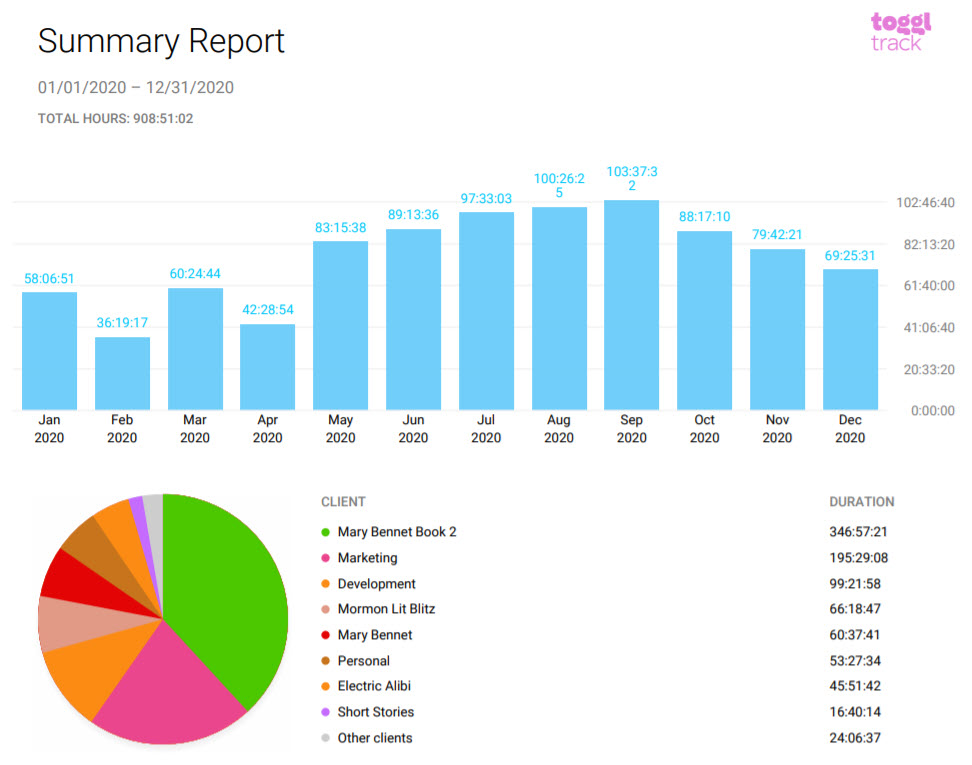
Summary Report of Hours Spent Writing in 2020 - KatherineCowley.com. Total: 909 hours. January: 58 hours, February: 36 hours. March: 60 hours. April: 42 hours. May: 83 hours. June: 89 hours. July: 97 hours. August: 100 hours. September: 103 hours. October: 88 hours. November: 79 hours. December: 69 hours.

909 hours works out to an average of 2.5 hours every single day including weekends (if you only include weekdays, it would be an average of 3.5 hours per day). So basically, it was my part-time job.

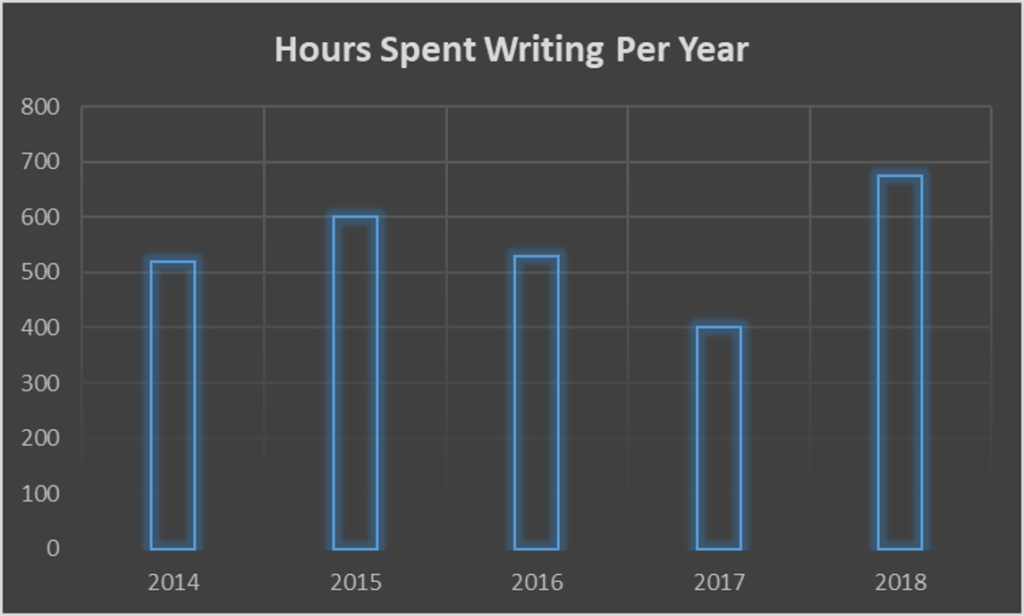
This is by far the most I have ever written in a year. As evidence, I present another chart:
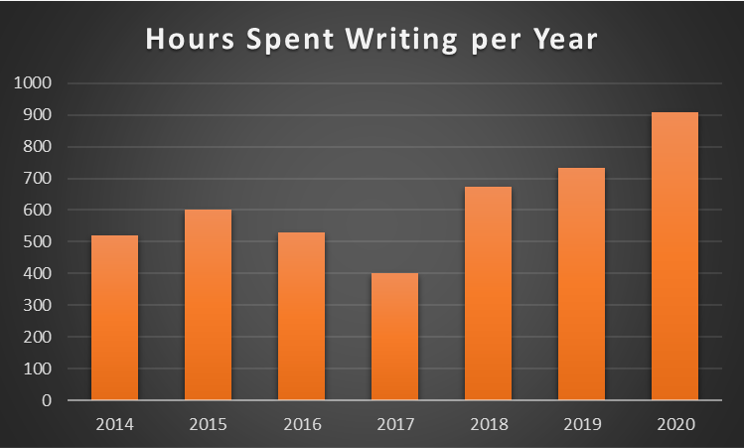
Hours Spent Writing Per Year. KatherineCowley.com. 2014: 520 hours. 2015: 600 hours. 2016: 530 hours. 2017: 400 hours. 2018: 675 hours. 2019: 734 hours. 2020: 909 hours.

The bulk of my time this year was spent working on my Mary Bennet series. (Which relates to my biggest writing news of the year—I got a three-book-deal with Tule!)

This year I spent 60 hours on the first Mary Bennet book (revisions and copy edits for Tule), 347 hours on the second Mary Bennet book (starting with the second draft, and revising it until it was ready to submit to Tule), and 9 hours on the third Mary Bennet book (this is the one I wish I had spent more on, because I really need to make progress on book 3).

Here’s the cover of the first book, which will be out on April 22nd, 2021:
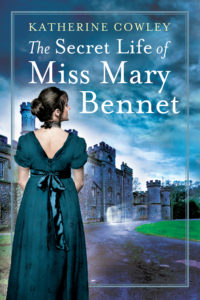
The Secret Life of Miss Mary Bennet (Cover)

(If you use Goodreads and haven’t yet added the book to your shelves, here’s the link!)

Another task that I put a lot of hours into was my Jane Austen Writing Lessons. I spent 125 hours on them, and I feel like the posts are really useful in terms of writing craft (and writing them has been a great diversion for me—it’s refreshing to write something that’s more essay-ish rather than fiction). Interesting note—of the 94,500 new words I wrote this year, 36,500 words were on Jane Austen Writing Lessons. So I’ve basically blogged half of a nonfiction book, which is pretty cool, to be honest.

How in the World Did I Write 909 hours during a Global Pandemic?

In part, this was due to the fact that I sort of lost my job this year.

I wasn’t fired. But due to university budget constraints, I wasn’t assigned a section to teach this fall, so I’m not working, and I’m not getting paid. Because I wasn’t actually fired, I can still access the university library (including the Oxford English Dictionary online) and keep my subscription to the New York Times.

Not working has had the side effect of giving me extra hours to write.

Also, the lack of going places and doing things this year has given me extra hours. For instance, I typically write a lot less in the summer, due to driving my kids to lessons and activities, as well doing a bit of travel. Suddenly, this summer, I had a lot more time, and my kids have now hit an age where they were better at entertaining themselves and each other.

Yet the biggest reason I’ve managed to write so much is that I’ve been channeling Alexander Hamilton (or at least the Lin-Manuel Miranda version of him)

Two of my favorite lines from Hamilton are in the song “Non-Stop”:

Why do you write like you’re running out of time?

How do you write like you need it to survive?
Hamilton gif: Why do you write like you're running out of time?

Why do you write like you’re running out of time?

This year, I’ve felt like I’m running out of time. And I accept full responsibility for this. When my agent started pitching The Secret Life of Miss Mary Bennet to publishers at the beginning of the year, I already had written a first draft of the second book in the series. So I was confident that if the series was picked up by a publisher, I could revise book 2 this year.

Lo and behold, Tule acquired the entire trilogy, and in my contract listed the date by which I would submit book 2 to them. November 1st, 2020. This was the date I provided, but it ended up being a challenging date to reach.

The book needed a lot more work than I realized—it was a hard book to write, a hard year for me to resolve story problems and actually get words onto the page, and so I spent the entire year writing and revising like I was running out of time. But I made the deadline, and I’m really happy with the results!

(The thing is, I would probably set a similar deadline for myself if I was writing a new trilogy. I would just keep my fingers crossed that there wouldn’t be a global pandemic during the process of writing.)

Why do you write like you need it to survive?

Writing has been one of the things that give me joy, that makes me feel steady and centered, and that gives me purpose and direction. And it truly helped me get through this year. So yes, I need writing to survive.

That and chocolate. Does anyone have chocolate? (I’ve somehow ran out of chocolate…)

Goals for 2021

  • Successful launch of my debut novel, The Secret Life of Miss Mary Bennet
  • Write and revise Mary Bennet book 3
  • Finish up a quick revision of an old steampunk mystery novel that I shelved for a few years

If I do these three things, I will be happy. (Also, I have to do the first two, because I’ve signed a contract, so…so I better go listen to some more Hamilton.)

Thanks for joining me on my writing journey!

(Also–side note. If you’re not subscribed to my newsletter, I sent out a newsletter today about how I recently deleted 100 pages from the aforementioned steampunk mystery novel. You can read about it by clicking on that link. And if you don’t want to miss future newsletters, subscribe below.)
2019 in Review: Writing, Writing, and More Writing

I would be remiss if I did not write my annual post about writing in the past year.

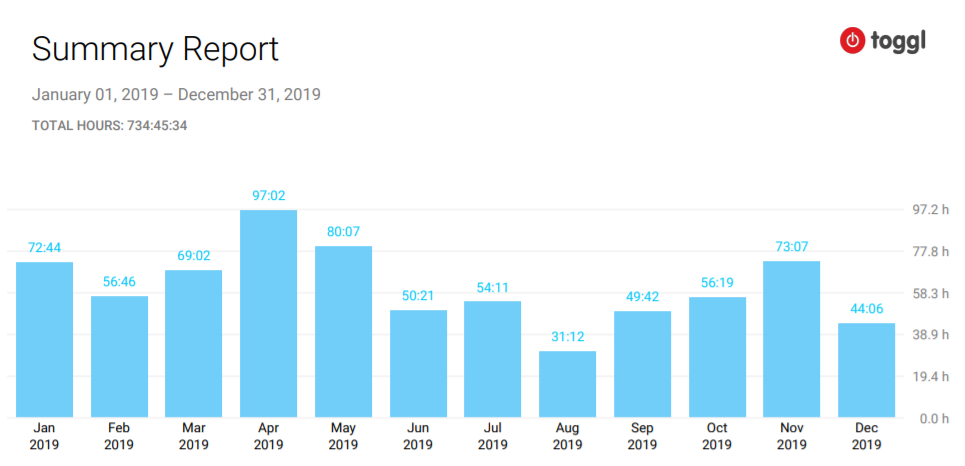
In 2019, I wrote more than I have in any previous year, coming in at 734.45 hours. That averages out to about two hours a day, every single day. (In comparison, last year I wrote 675 hours, which was a personal best; in 2017 I only wrote 400.)

Of course, I didn’t spend two hours writing every single day–there were weeks where I did much more, and weeks where I did much less:

And what did I do with those hours?

First and foremost, I spent 381 hours on my Regency Mystery Novel

  • Draft 2: 58 hours (I had started Draft 2 in 2018)
  • Draft 3: 108 hours
  • Newspaper Research: 18 hours
  • Draft 4: 6 hours
  • Draft 5: 15 hours
  • Draft 6: 77 hours
  • Draft 7: 16 hours
  • Submitting to Literary Agents: 47.5 hours
  • Working on Book 2: 34 hours
  • And other minor tasks

The big news of the year was getting a literary agent, something I wrote extensively about in another blog post.

And then the rest of the writing time was a mix of writing/revising short stories, critiquing, conferences, writing groups, running an international writing contest for a literary nonprofit, journal writing, etc. I had one short story published during the year, Paradisiacal Glory

During the year, I wrote a solid 55,000 words, and perhaps a significant amount more (during the revision process I rewrite a lot of entire sentences, paragraphs, and scenes, which sometimes doesn’t end up in my word count log).

Not included in my writing chart, but also writing-related: In August 2019, I started a part time job, working as an adjunct faculty member at Western Michigan University, where I now teach first-year writing.

And that’s my year! For the next year, I plan to finish book 2 in my Regency mystery series, and perhaps start researching a new series.

2018 in Review, and Learning Acceptance

It’s that time of year—that blessed time you’ve been waiting for—when I blog with charts! Pie charts, column charts, glow-in-the-dark charts, edible charts, I’ve got them all!

Last year I spent 675 hours writing. That’s an average of 1.85 hours per day, every single day.

The increase in time came in part by failing at other things (or, more kindly, letting go of other things). For instance, I completely failed at my Goodreads reading goal for the year. My garden grew many tomatoes but little else. My kids took only one set of swimming lessons this year instead of three or four. Other time came from the fact that I did not move or have a baby in 2018.

I also used a time tracking app, toggl, which meant I recorded my time digitally, with the start and stop of a button on my laptop or cell phone. In past years, I think I was slightly underestimating the amount of time that I spent working. (If you’re interested in using it yourself, I guest blogged about using toggl to track your writing on The Writing Pal.)

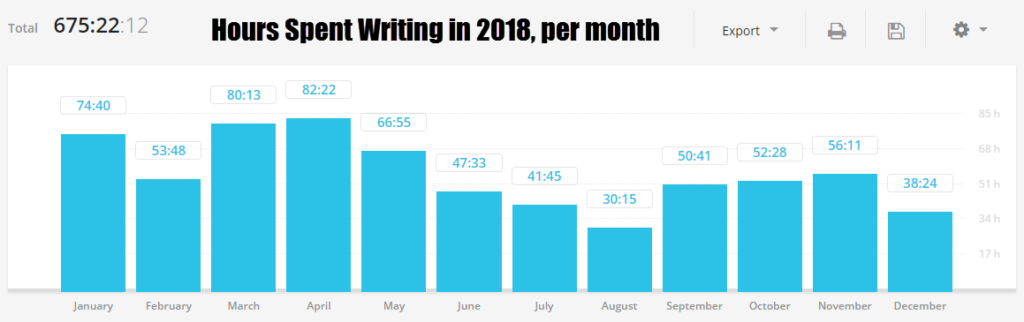
Using toggl means that I have more beautiful charts that try to capture 2018 for me. Here’s my writing time per month:


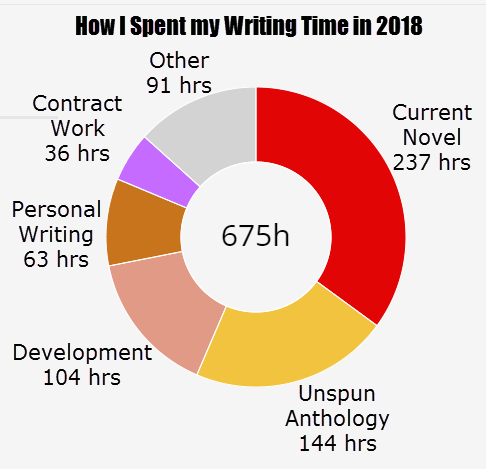
And here is how my time was distributed across projects:

In second place for time spent was the fairy tale anthology Unspun. Not only did I have a novella in the anthology, but I coordinated the editorial work flow for each of the pieces (making sure each of the 11 pieces went through content edits, revision, copy edits, revision, proofreading, revision), formatted the book, wrote and managed contracts, and helped publish it. I am supremely happy with how it turned out.

The other big push for my writing time was my current novel, a historical mystery set in London in the crazy year of 1814. (1814 was truly a crazy time to be alive.)

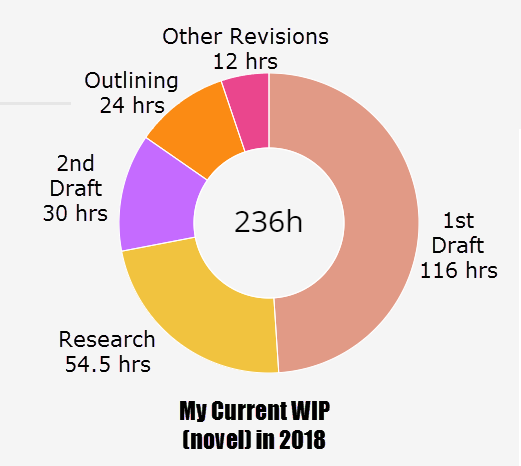
Here’s the breakdown for how I spent my time on the book:

I worked on the first draft from January 1st to November 29th. The constant outlining and the research were all essential for writing the first draft, so I actually spent 194.5 hours on the first draft. During the year, I added approximately 67,334 words to the project, which means I wrote at a speed of about 346 words per hour.

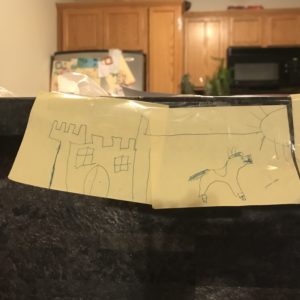
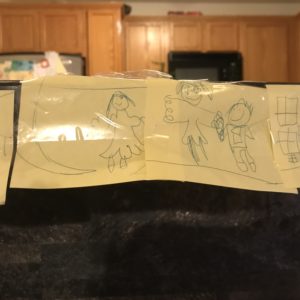
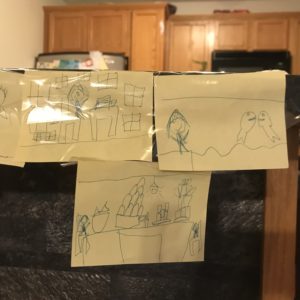
So far I’ve spent 42 hours revising and am about a third the way through the second draft. It has an enormity of work left, but it’s really starting to take shape. Also, my six-year-old-daughter, who spent two minutes quizzing me on things that happen in the story, decided to illustrate the book and tape the illustrations to the counter, so prepare yourself for major spoilers:

[There are no kissing fish in the novel, but everything else is accurate.]

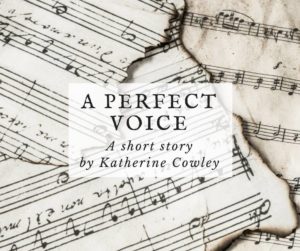
In 2018, I also wrote a little over 2000 other words, on two short stories. One of those was “A Perfect Voice,” which won first place in the 2018 Mormon Lit Blitz.

I received 5 rejections for other things I submitted during the year. I was accepted to teach a class locally on the Steampunk genre, but then it was cancelled due to inadequate enrollment.

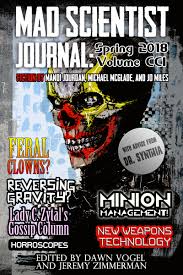
2018 also brought back to life a story that I had written in 2014. It had received about 7 rejections in 2014 and 2015 and I decided it would never be published. In 2017 I pulled it out again and started submitting it to very different publications (instead of science fiction journals, I submitted it to humor and satire and themed issues) and I got very positive rejections (“we really liked this but it’s not quite the right fit”). Then I found Mad Scientist Journal, submitted the story, and it was accepted. It was published this year and can now be read online.

One of the big lessons for me this year was learning acceptance. I see so much online about how to write faster, and in many ways that is heralded as the mark of success. If you write four novels, or 500,000 words a year, or write 50,000 words in a single month, then you are a writer. But I’ve tried and those tricks don’t work on me, or they produce such terrible results that I end up abandoning projects. (I actually wrote an entire—very dreadful—novel in the month of November 2010 and then abandoned the act of writing for over a year and a half.)

This year I’ve tried to embrace acceptance.

I’m accepting that I’m not a fast writer.

I’m accepting that becoming a better writer has actually made me a slower writer.

I’m accepting that although my first drafts are better than they used to be, they still need plenty of revision.

I’m accepting that I can’t wake up at 5 a.m. like some writers do or stay up late to get more writing done. When I do that I get terribly depressed.

I’m accepting that many of the tricks and tips and sure-fire techniques to write more every month don’t work for me. (Or I’m already using them, and they make possible the 15,000 word months.)

I’m accepting that putting more time towards writing doesn’t necessarily increase my output: I only have so much creative energy to put towards writing every day.

I’m accepting that sometimes I can’t write. There are days and weeks and outside life circumstances that don’t let me write.

I’m accepting that there are weeks I’ve spent too much time writing (in balance with other things) and that I need to pull back sometimes.

I’m also accepting that I can give myself permission to write, even when it seems like myself and other people think I should place my energy on other priorities.


I’m at a better mental place as a writer at the end of 2018 then I was at the end of 2017. In 2017, I considered abandoning my writing goals. And now I feel like singing the line from Hamilton: “I am not throwing away my shot.”

For 2019 I have plenty of writing goals and plans to achieve them, but ultimately, I will put forth the effort and energy that I am able. 2019 does not need to be my best or my busiest or my most successful year as a writer. I will accept who and what I am as a person and as a writer. And that will be enough.

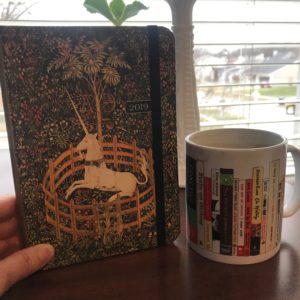
Also, I have a new writing hot chocolate mug and a planner with a unicorn, so I am ready for whatever 2019 brings.


2017 in Review: Comparison is the Thief of Joy

I did not meet the lofty writing goals I set for myself in 2017. That is typically true of my lofty goals–but I set them because they push me to do more and to do it faster. But in 2017, not only did I not achieve my goals, I crashed and burned at most of my attempts.

My Writing Attempts in 2017

I feel this particularly when I compare how much I accomplished in 2017 versus what I was able to do during each of the previous three years (in terms of word count, number of novel drafts, etc.). But as I’ve reflected on 2017 during the last few weeks, what keeps coming to me is the quote attributed to Theodore Roosevelt: “Comparison is the thief of joy.”

In the past I’ve taken this to mean: don’t compare your writing results to others. There is always a writer that will write faster or better or sell more or receive more credit. Comparison is a key to misery.

Yes, it’s a bad idea to compare yourself to others, but it can also be a bad idea to compare yourself to yourself. I am not the same person I was in 2014 or 2015 or 2016. Despite my efforts, I could not do the same things as I did previous years. And I don’t need to beat myself up for it.

There’s a lot of emphasis on being better than you were yesterday or last year. People talk about making this year “the best year ever.” To me, that is a daunting prospect, and sometimes it’s simply not possible. Life is not a continual summit up an ever-growing mountain. It’s a long journey across uneven terrain with peaks and valleys, twists and turns, rivers and plateaus.

In 2017 I looked at writing (and several other aspects of my life that I cherish and love) and considered abandoning it entirely. I am a person who firmly believes it is okay to give up on dreams and pursue new ones. And I seriously considering casting writing aside. After a lot of soul searching, I’ve decided that I still have stories I need and want to tell. So I’m still here. And that is an accomplishment.

A few other accomplishments for 2017:

-I wrote and revised a novella about an ugly princess who rides around on a goat brandishing a large, wooden spoon. The story will be part of a fairy tale anthology I’m putting together with some friends; we’re going to publish it in February or March 2018.

-I received 2nd place in the 2017 Mormon Lit Blitz for my flash fiction story, “Celestial Accounting.”

-I received 5 beautiful, personalized rejections for short stories and essays.

-I received 1 acceptance for a short story (for “Confessions of a Mycologist,” which will be published in the March 2018 issue of Mad Scientist Journal).

-I attended a one-day writer’s conference in Detroit.

-I submitted an adult novel to about 20 literary agents and a YA graphic novel to about 10 literary agents.

-I started a monthly writing group, and critiqued novels, a poetry collection, and essays for other writers.

-I let myself move on from a novel that I am unable to write right now.

As I look at this list, each of these things is good and beautiful–including rejection, including moving on from things that aren’t working. Each item on the list is worthwhile, each deserved my attention. In total, I likely spent at least 400 hours (or a little more than an hour a day) on writing or writing-related activities. I do not regret giving writing that time, even though there are so many other things I could have given it to. (Imagine how much cleaner my house could’ve been for unexpected visitors! Or how many pastries I could’ve baked in 400 hours!)

Desserts

I’ve set myself a few lofty writing goals for 2018. And I may or may not reach them.

But I will keep moving forward, one word at a time. And I will do my best to not let comparison rob me of joy.

Writing 2016: A Year in Photos

New BabyI set my writing goals lower this year because of having a new baby. But I am proud to report that I still can write with three young children.
My Writing Goal for 2016 = 400 hours

Actual Time I Spent Writing in 2016 = 530 hours

That’s almost 1.5 hours per day. For comparison, I wrote 600 hours in 2015 and 520 hours in 2014.

One of the most common questions I get is How do you find time to write with three kids? I think an equally appropriate question would be, How does anyone with three kids find time to eat or shower or exercise? Or, equally appropriate, How does anyone with a full-time job find time to write?

I think you can treat something creative like just as much of a necessity in your life as eating, you can create good habits, you can train yourself to use small amounts of time and moments of low-energy to create. And if you really want it, you can cut out other things. I used to read over 75 novels a year, and while I still read a lot, I don’t read nearly as many now. I cut out my favorite TV shows. All of them. I sacrifice things that I want and that I love every single day that I write. I wasn’t always ready or willing to make that sort of sacrifice and commitment, but for the past three years I have been.

How did I spend those 530 hours of writing time?

Caught Writing (Photograph by my daughter)I revised my steampunk novel, completing several more drafts of it. Near the end of the year it hit the point where it was as finished as I can make it. So I am now submitting.


I also wrote and revised a graphic novel script, based off a novella I wrote several years ago. I love graphic novels, and I loved learning how to write in the form, something that was made much easier by doing a Media Arts/Film minor in college.

I also guest edited the 5th Annual Mormon Lit Blitz, a contest for LDS micro-literature (fiction, essays, and poetry, all under 1000 words). I did contest promotion (including guest blogging), was one of three judges for over one hundred entries, helped edit the selected finalists, and ran the voting. It was a lot of work, but worth it. I also enjoyed trying on an editor’s hat for a competition I’ve been involved in as a writer.

The 2016 Mormon Lit Blitz

365 TomorrowsShort Fiction

My flash fiction story, “Misunderstood,” was published in 365 Tomorrows.

I didn’t write as many short stories this year–I wrote two new short stories and revised two other short stories. And because I wasn’t writing as many short stories, I wasn’t submitting as many–but I did submit.

Over the course of the year, I received eight rejections and two acceptances. One of those acceptances was for “Misunderstood.” The other was for…

The Last BathroomThe Last Bathroom,” which was published in the humor magazine Defenestration.

I sometimes write really weird stuff, like genre-bending stories featuring superheroes visiting all the bathrooms in the city during the apocalypse. So I was really happy to find the perfect home for this piece.

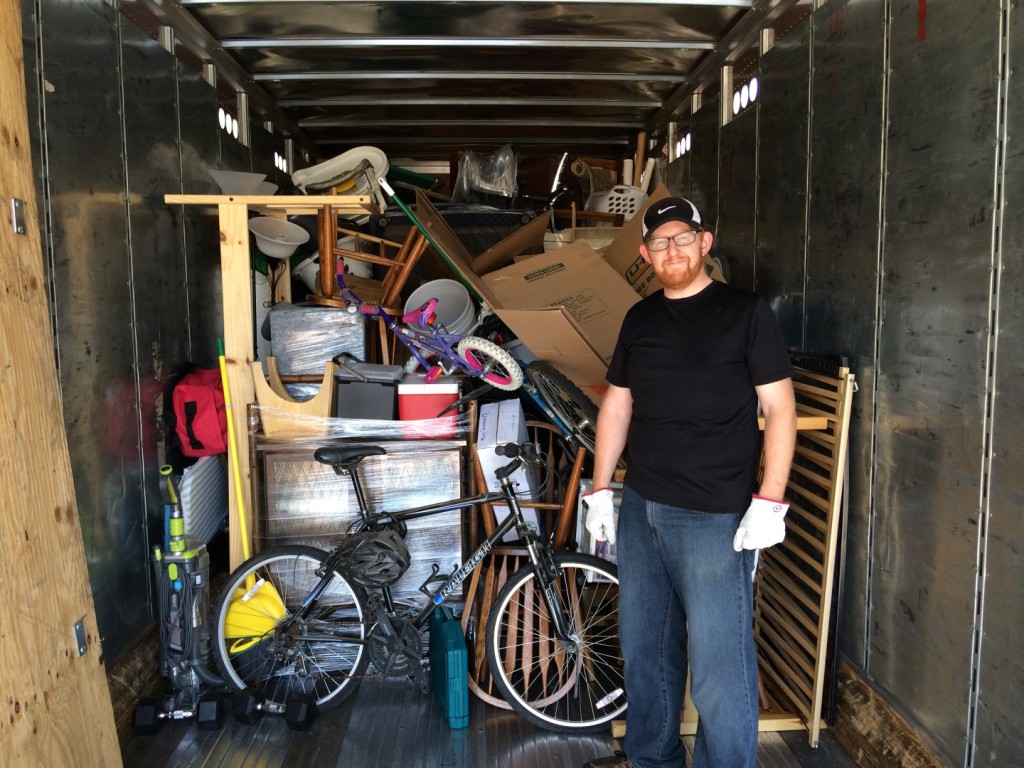
Interrupting all of my writing was a cross-country move, from Phoenix, Arizona to Kalamazoo, Michigan. The picture is of everything we own, stuffed into a moving truck.

img_6514-large

I was sad to say goodbye to a lot of really good writing friends in Arizona, and several critique groups.

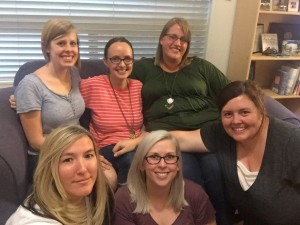
A Critique Group

In my critique group named “WeeWa” we even figured out how to use a selfie stick.

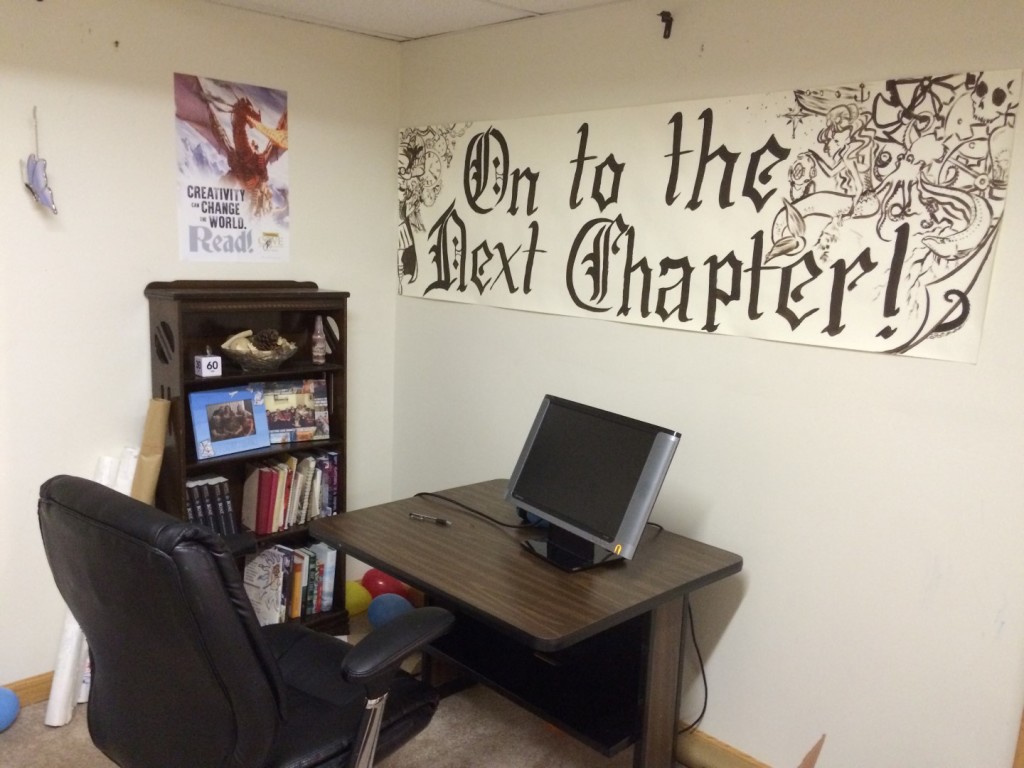
Our new rental in Michigan has a basement–so I claimed part of it as my own and created a writing corner.

My Writing Corner, Pre-Flood

Isn’t that just beautiful? The steampunk poster that reads “On to the Next Chapter” was hand painted by my friend Dena Haynes, who is both an incredible writer and artist.

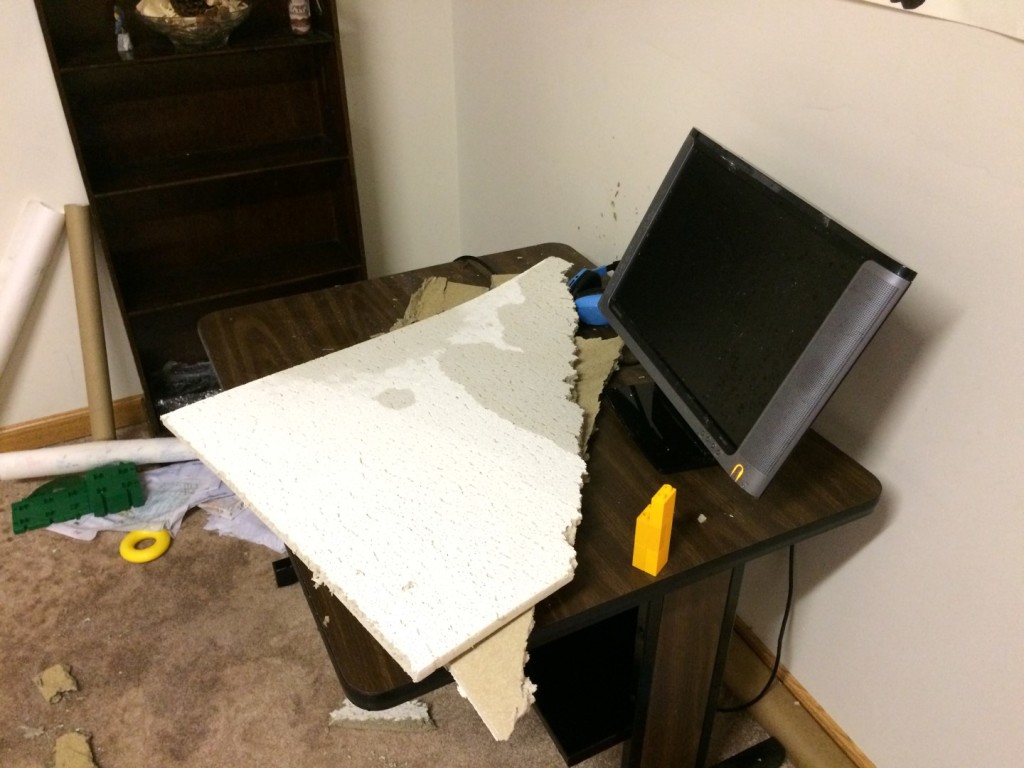
Unfortunately, ten days after I finished making my writing corner look beautiful, our basement flooded. Water poured through the air ventilation system, which is not waterproof, so it basically rained throughout our entire basement.

My Ruined Writing Space

Yes, those are waterlogged ceiling tiles that used to be above the desk.

I was kind of heartbroken by the damage to my beautiful space. I kind of still am, in fact. I’m also heartbroken by the fact that all of my old drafts for my different projects, with all my beautiful, hand-written notes on them, were ruined. I do have each completed draft digitally, and my twelve foot outline for my steampunk novel survived. My writing posters did not get a drop of water on them–hallelujah.

The owner of the house is still working with the insurance company, and theoretically the basement will be fixed soon. (It’s been over two months, and as a writer I am always wary of ambiguous words like “soon.”) My husband still works downstairs in the evening, but I haven’t written a word downstairs since the flood.

However, I have still written.

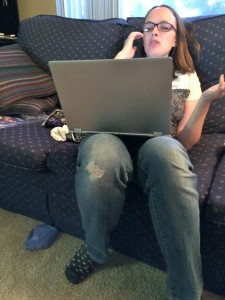
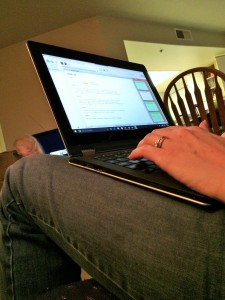
Portrait of me working on my computer, taken without my awareness, probably by my 5-year-old daughter.

Portrait of me working on my computer, taken without my awareness, probably by my 5-year-old daughter.

I did a lot of critiques this year–I critiqued at least ten full novels, a bunch of essays, and other miscellaneous things that needed a bit of love. I like critiquing because it keeps me fresh and focused and helps me in viewing my own work in a critical light.

I also edited a fashion textbook–both with a content and copy edit. Afterwards, the fashion consultant author took me shopping, and I now know how to buy jeans that truly fit me. (I spent so many years not knowing what I was missing–seriously, my life has been changed.)

And I spent at least fifty hours (which was not counted in my total writing hours) doing a data coding project to help my husband out on his dissertation.

But that is not all!


Katherine Cowley Presenting at Time Out for Writers

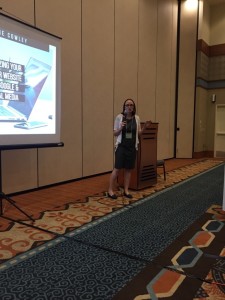
I presented on “Writing Powerful Story Beats” during the online LDS Beta Readers conference–you can watch the video on youtube. And in September I taught two classes at the “Time Out for Writers” conference in Phoenix (one class was on Optimizing Your Author Website and the other was on Worldbuilding).

And that, folks, is my writing year. I have great writing plans for 2017.