An intriguing snippet which has Jane Austen's portrait and a mysterious gray box with the words, "Cover Coming Soon"

New Book: Write with Jane Austen
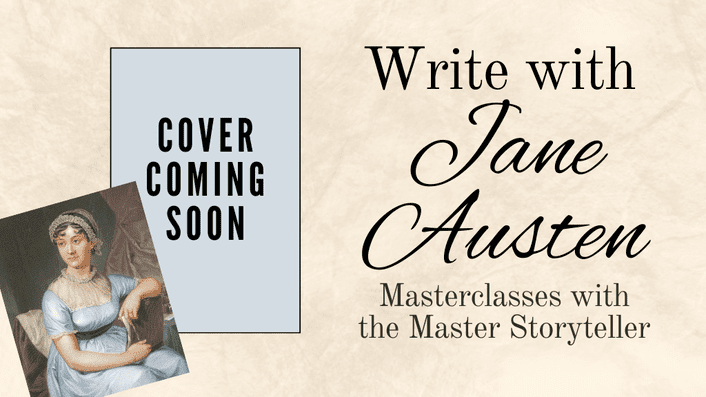
Write with Jane Austen: Masterclasses with the Master Storyteller. The image also contains a mysterious gray box with the words "Cover Coming Soon," and a picture of Jane Austen

ETA: May 5th 2025: Write with Jane Austen is now live on Kickstarter!

If you’d like your own copy, you can pre-order the book there.

And here’s a sneak preview of the cover:
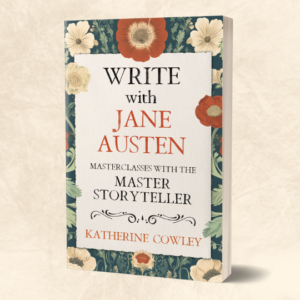
A 3D rendering of the book Write with Jane Austen: Masterclasses with the Master Storyteller

And now, back to the original post:

2025 is Jane Austen’s 250th birthday, and to celebrate, I am releasing a book titled Write with Jane Austen: Masterclasses with the Master Storyteller.

A Description of the Book

It is a truth universally acknowledged that if a writer wishes to write well, she should learn from the very best of writers. In other words, she should study with Jane Austen.

Write with Jane Austen is the definitive guide on how to improve your writing. Its lessons and examples draw from Austen’s six published novels and from her unpublished works. This book will help you craft a character’s internal and external journeys, create effective antagonists and obstacles, construct compelling relationships, capture a setting without disrupting the forward movement of the narrative, improve your style, and compose dialogue which brings the characters and the story to life. Each chapter contains writing exercises which will help you internalize and apply these principles.

Whether you write romance, women’s fiction, historical fiction, mystery, or any other genre, this book will enable you to emulate Jane Austen’s proven techniques and improve your storytelling. This guide will also increase any reader’s appreciation for Austen’s craft.

Background on the Book

From 2020 to 2022, I wrote a blog titled Jane Austen Writing Lessons. For each post, I took a writing topic (for instance, writing sympathetic characters) and explored principles and techniques that could be learned from Jane Austen’s six published novels.
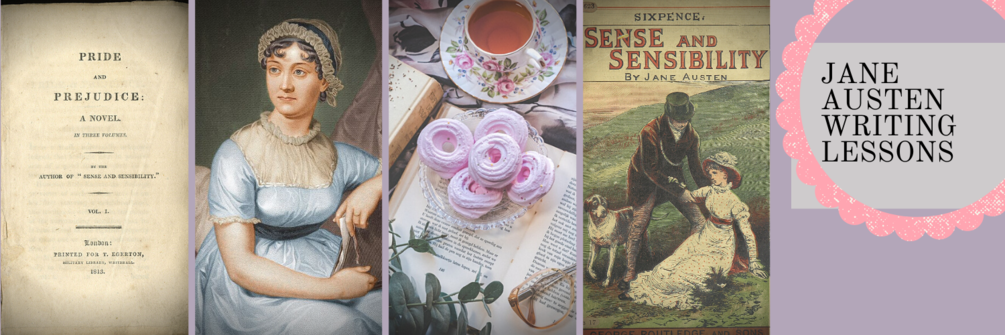
Jane Austen Writing Lessons. With an image of the original cover page of Pride and Prejudice; a color image of Jane Austen; an image of tea and pastries with an open book, and an early cover of Sense and Sensiblity.

I had a fabulous time writing about sixty-five posts, and the blog was recognized by The Write Life as “one of the best websites for writers in 2021.” A number of readers and friends encouraged me to turn the blog into a book. I played with the idea, but I was working on other projects, so I never pursued it.

Fast forward to the summer of 2024. I realized that this coming year—2025—is Jane Austen’s 250th birthday. And I decided that this was the next project of my heart: to create a book on creative writing through the lens of Jane Austen’s works.

And so I went to work.

I didn’t want the book to read as a series of blog posts—I wanted beautiful chapter arcs. I ended up scrapping about 50,000 words from my blog. Delete. Delete. Delete.

There were also a number of new chapters and sections I wanted to write. And write I did. I added chapters on relationships, rising action, the climax, style, and more. The book is over 50% brand new material that never appeared on my blog, and the chapters taken from the blog have been heavily revised.

I still have a bit more editing to do, and then the book will be copy edited and proofread, but it won’t be long until I can send the book out into the world.

Crowdfunding Write with Jane Austen on Kickstarter

I am really excited to release Write with Jane Austen in an interactive way, through Kickstarter. Kickstarter is a crowdfunding website designed exclusively for creative projects. It has been used extensively by both new and established authors, including bestselling names like Brandon Sanderson.

The classic green Kickstarter logo.

I’m using Kickstarter because:

  1. It’s a great platform to run preorders for books.
  2. It’s interactive and exciting—I’ve personally backed 19 projects on Kickstarter, and as a reader, I love knowing that I can help bring a project to life. I also love the comments section (Kickstarter is the only place where it’s fun to read the comments!), the in-process updates from the creator, and the feeling of community.
  3. Running a Kickstarter will help cover the production costs for the book (i.e. cover, professional editing, etc.)
  4. Releasing a book on Kickstarter allows my loyal readers, friends, and fans to get a copy of the book months before it’s available to everyone else.
  5. Kickstarter allows me to offer other things in addition to the book—like writing workshops and a special edition workbook. (I will tell you more about these in the near future!)

The Kickstarter for the project will go live in March/April—to be the very first to know when it does, visit the book’s pre-launch page and click “Notify me on launch.”

Final Thoughts

I’m really excited to share this book with the world. Reading Jane Austen has changed my life for the better, and studying her craft in depth has transformed my writing. She truly is the master storyteller.

Don’t Miss Important Updates

To make sure you don’t miss important news and updates, sign up for one or both of my newsletters.

My regular newsletter contains information about my books, events, giveaways, and my reading recommendations. It will include some updates on the Write with Jane Austen book.

The Write with Jane Austen newslettter will include more updates on the book, exclusive tidbits, and mini-writing lessons to tide you over until the book is available.
Newsletters Signup

* indicates required

Which newsletter(s) would you like to receive?

Intuit Mailchimp

2023, A Writing Year in Review: Bulbs and Beavers (and Pie!)

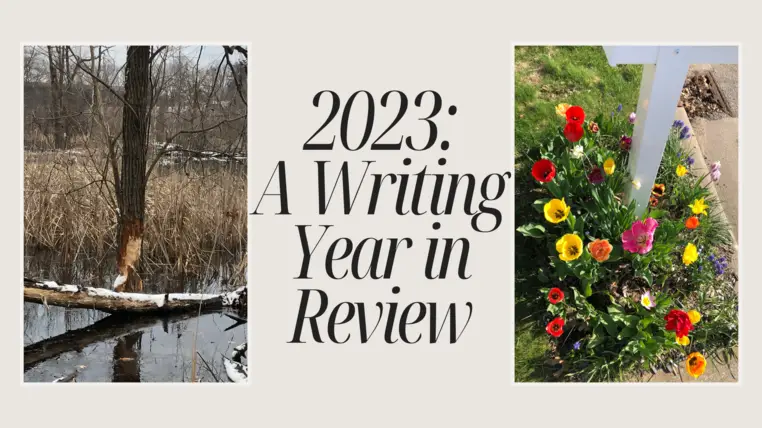
2023: A Writing Year in Review. With a picture of a tree, barely standing as it has been gnawed by a beaver, and tulips next to a mailbox.

Last year, in 2022, I had two novels and two short stories published, wore fancy dresses and attended two awards ceremonies, ran a successful Kickstarter for a nonprofit, spent 937 hours writing, and had what is, for writing, a rather glamorous year.

This year was very different.

A hipster writer. He looks at you instead of his page. He might be pensive, but he might be sadness. Perhaps writing requires a certain weight of sadness, at least in 2023.

Above: Peak 2023 writing energy. Deposit photos says he is “hipster.” If I owned that hat, maybe I would be hipster too.

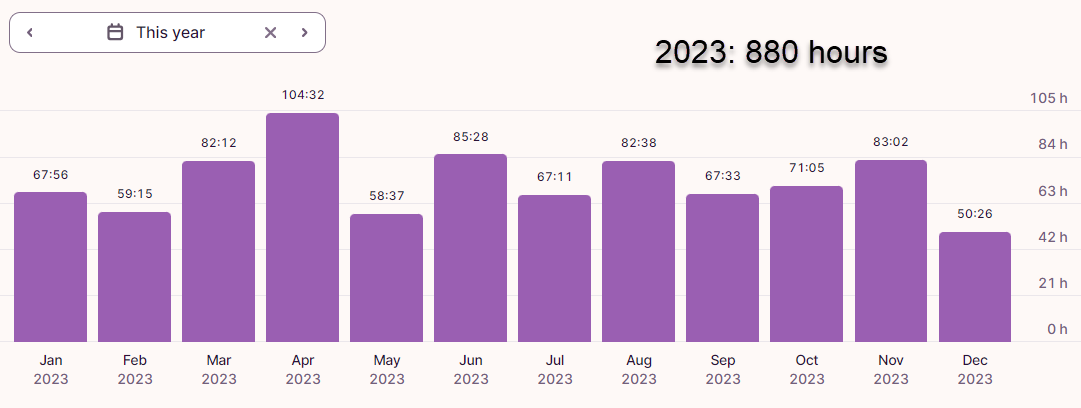
In 2023, I had no books published. I attended no award ceremonies. I spent 880 hours writing (which is lower than the amount spent in 2020, 2021, and 2022). I hit a point in the revisions process where my confidence (as a writer) decided to indulge in clichés and completely shatter, like a Corelle soup bowl on the kitchen floor, shards of glass scattering across two full rooms. (Corelle is made of tempered glass, so it’s not supposed to break easily, but in my house, we’ve broken at least four bowls and plates this year.)

Yet right now, as I look back on another year of writing, I feel good about 2023.

Hours Spent Writing Per Month in 2023, by Katherine Cowley. January: 68. February: 59. March: 82. April: 104. May: 59. June: 85. July: 67. August: 82. September: 68. October: 71. November: 83. December: 50.

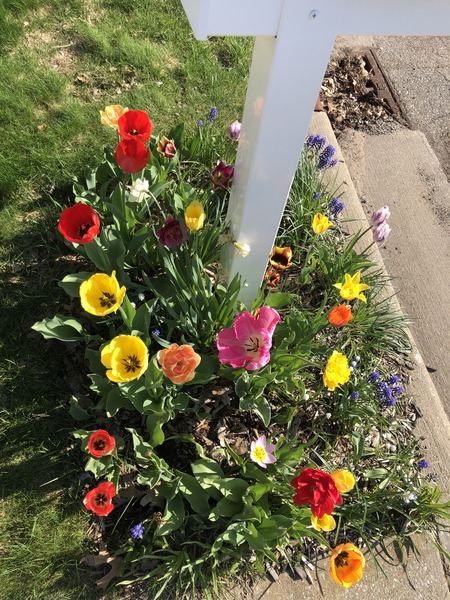
This year of writing was like planting bulbs in the fall with the hope that they’ll come up in the spring. Yes, despite the spicy hot pepper-based deer repellant, the deer might still eat all of them, but chances are, next year I’ll have tulips.

A small garden bed of brightly colored tulips.

A picture of my tulips from this spring. Unlike in 2022, when the deer ate all my tulips a few days before they blossomed, in 2023 my tulips survived so they could act as a positive metaphor.

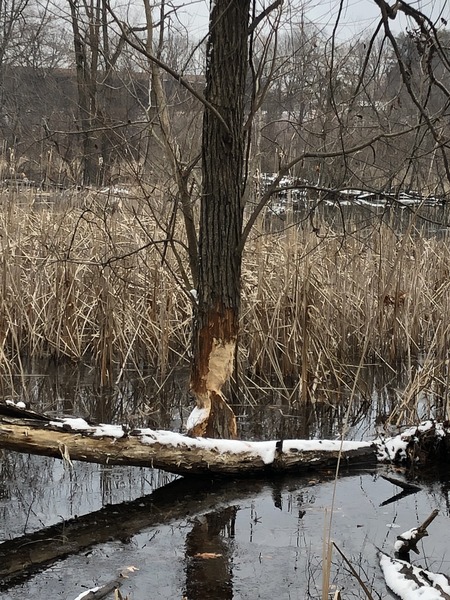
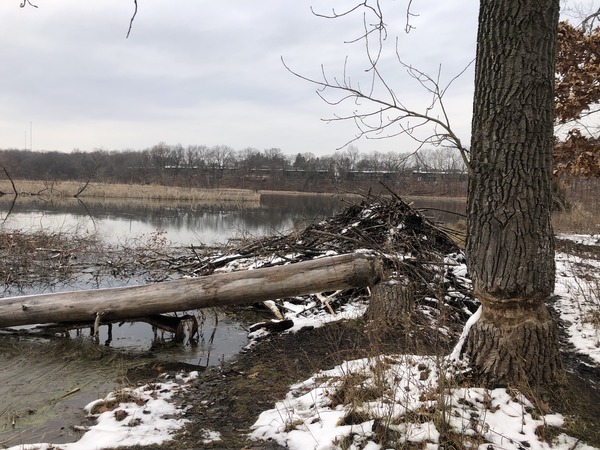
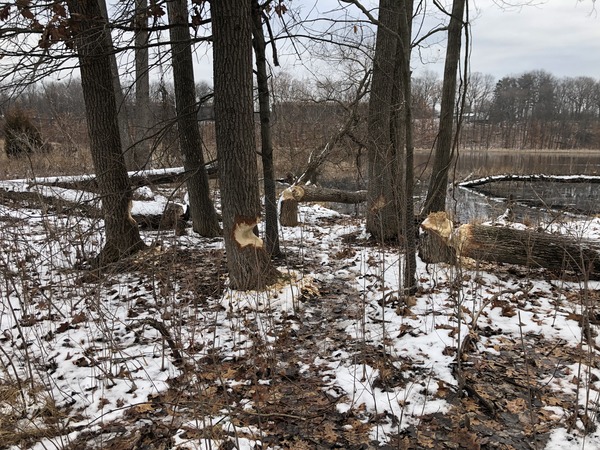
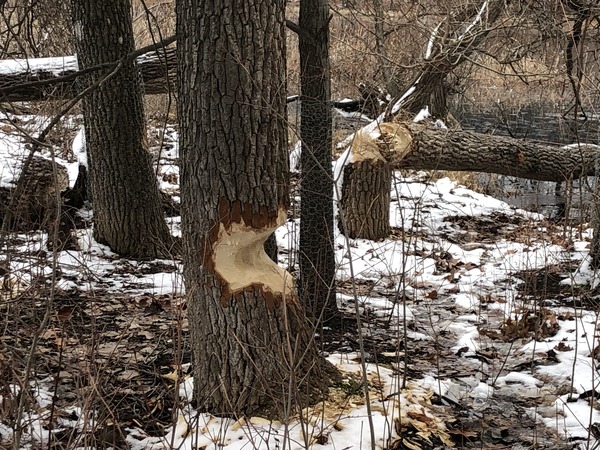
This year of writing was also like a beaver, gnawing on trees. There are lots of trees to gnaw on. There’s a lodge to maintain. There’s pesky, flowing water that must be stopped. Sometimes people put up metal netting so you can’t get to the best trees. Sometimes you take down a whole tree at once, but most of the time, that’s not possible. So you start on a few trees and make some progress, knowing that you’ll have time to do the rest later.

A tree in a marshy area of a pond. It has been gnawed on on both sides by a beaver, yet somehow it stays standing.

These are pictures that I took that show the efforts of the local beavers at the Asylum Lake Nature Preserve in Kalamazoo, Michigan. Every few months, I check on the beavers’ progress.

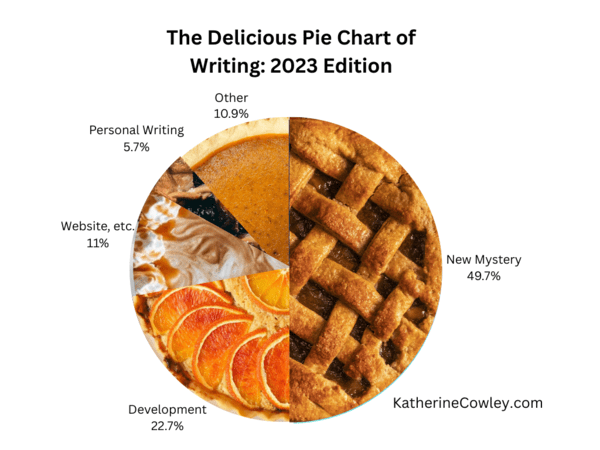
What trees did I gnaw on this year? Well, there’s a chart for that.

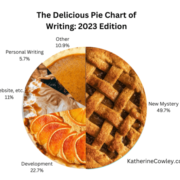
I love charts, I love pie, and I love writing. This collision of all three interests was meant to be.

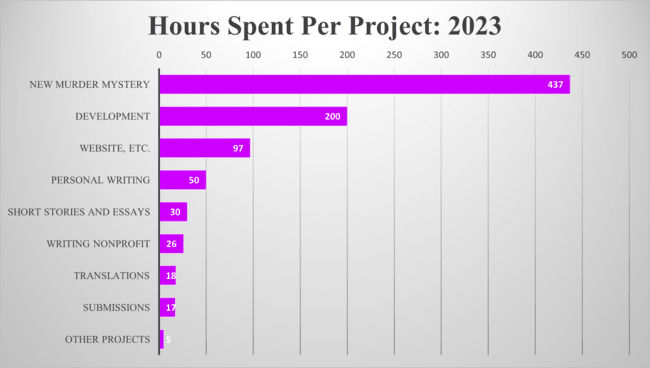
And now, in classic bar graph form:

Hours Spent Per Writing Project in 2023. New Murder Mystery: 437. Development: 200. Website, etc.: 97. Personal Writing: 50. Short Stories and Essays: 30. Writing Nonprofit: 26. Translations: 18. Submissions: 17. Other Projects: 5.

And, because I like writing, some written details for a few of the categories:

New Murder Mystery (437 hours)

These 437 hours are on top of the 227 hours I spent on this book last year, bringing the total up to 664. This is the most research-intensive, complicated, and challenging book I’ve written. It’s also been like making soup—the components have needed time to stew together, so the flavors develop properly.

Development (200 hours)

  • Conferences: Malice Domestic and the Midwest Mystery Conference
  • Critiquing and writing group
  • Networking
  • Writing craft and mystery genre research
  • Accounting, taxes, and business stuff
  • Planning and considering goals

Website, etc. (97 hours)

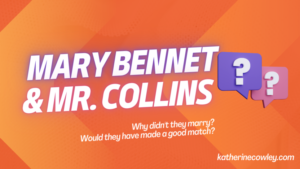
Website, newsletters, blog posts, and a few book events! My most popular blog post for the year was on Mary Bennet and Mr. Collins.

Mary Bennet and Mr. Collins. Why didn't they marry? Would they have made a good match?

Submissions (17 hours)

Most of this time was spent applying to an art residency. I didn’t get selected, but I was on the short list, and now I have a very solid concept for a future book that I plan to write.

Looking to 2024

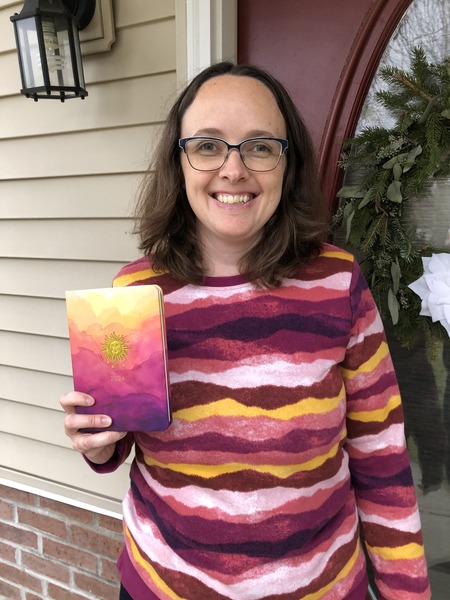
Me with my 2024 planner, which matches my sweater. Maybe I am hipster after all.

I often have a 2-year writing plan, with all my upcoming projects figured out. I don’t right now, and that’s both terrifying and liberating.

I do know that I’ll need to do more revisions on my current mystery novel. I want to write some short stories, and spend a few weeks focusing on reading and doing other things to refill my creative well. I suspect I will start a new book. Will that be a sequel to my current novel or to Mary Bennet? Or something entirely new? Only time will tell.

Subscribe for book news, events, giveaways, writing tidbits, and other updates from Katherine Cowley!

* indicates required


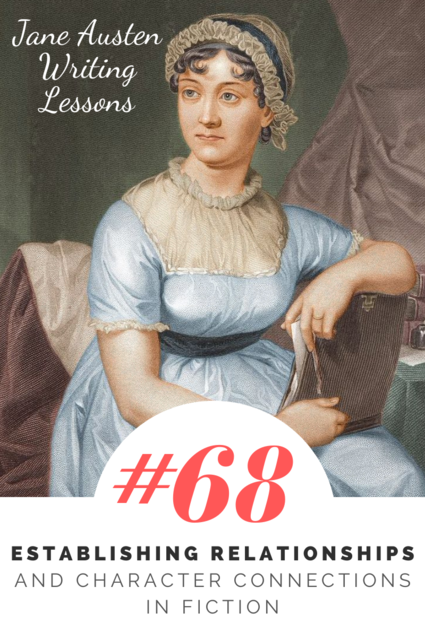
Jane Austen Writing Lessons #68: Establishing Relationships and Character Connections in Fiction

#68: Establishing Relationships and Character Connections in Fiction

Jane Austen Writing Lessons #68: Establishing Relationships and Character Connections in Fiction

This is the first post in a new series within Jane Austen Writing Lessons which will focus on relationships and character connections. A lot of times we think about relationships as romantic, and we will talk about that (after all, Austen has written some of my all-time favorite romantic relationships). But before we get to that point, we’re going to consider more general principles of establishing character relationships and connections.

In Jane Austen’s novel Emma, the very first spoken dialogue comes from Emma’s father, Mr. Woodhouse. He declares:

“Poor Miss Taylor!—I wish she were here again. What a pity it is that Mr. Weston ever thought of her!”

Miss Taylor is Emma’s former governess. She has recently married Mr. Weston, and as a result she no longer works for Mr. Woodhouse. Mr. Woodhouse is highly opposed to her loss. Emma attempts to convince her father that the marriage is a positive thing, beginning by saying, “I cannot agree with you, papa; you know I cannot.”

In these first few pages of Emma, the relationships and connections between characters begin to unfold:

  • Miss Taylor is in a romantic relationship with Mr. Weston.

    Emma believes she is responsible for their marriage. As a result of this marriage, Emma decides she wants to be a matchmaker, which sets off the novel’s chain of events.

  • Miss Taylor worked for Mr. Woodhouse.

    Clearly, he was highly reliant on her, and he considers his own needs and desires as more important than her own. He feels like his relationship with Miss Taylor can no longer have the same benefits or value. Even the possibility of visiting her seems nigh impossible, though they do not live far away.

  • Emma is friends with Miss Taylor.

    Emma is saddened by the fact that her friend/governess will no longer always be with her—Jane Austen writes, “Sorrow came—a gentle sorrow.” Yet because of their genuine friendship, Emma is pleased at the marriage. Emma is confident that she can retain her connection to her friend even though their circumstances have changed.

  • Emma and Mr. Weston.

    Their relationship is less clear in the opening pages, and their connection is not as strong as that between the other characters; however, Emma declares Mr. Weston to be “a good-humoured, pleasant, excellent man.”

  • Emma and her father, Mr. Woodhouse.

    In the opening paragraphs, the narrator declares that one of the evils of Emma’s upbringing is that she has “the power of having rather too much her own way.” This reflects on her relationship with her father. Emma also has an incredible loyalty to him: she is devoted to staying with him and taking care of him. From the first chapter, we see her trying to help her father by encouraging him to accept their new situation and changing relationships with others.

Even in these first few pages, Jane Austen masterfully establishes the relationships between different sets of characters. Many of these relationships become driving factors in the novel, influencing plot and character, and adding meaning and consequence to the characters’ actions. Some of the relationships shift and change over the course of the novel, while others remain relatively static.

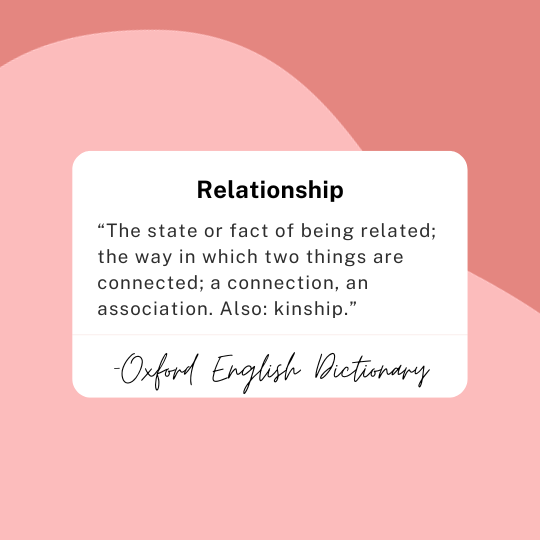
The first definition for the word relationship in the Oxford English Dictionary (OED) is as follows:

The state or fact of being related; the way in which two things are connected; a connection, an association. Also: kinship.

It’s only in definition 2b that the OED defines a relationship in an emotional or sexual way, so let’s linger on this first definition of relationship, in which two people are related or connected in some way.

The primary root for the word relationship is the word relation, which, according to the OED, began to be used in English in around 1398. A relation means there is a “connection, correspondence, or contrast between different things.” Examining the relation between two things means considering why they are associated or what connects them. A relation can also mean “the social interactions that occur and feelings that exist between two or more people or groups of people.”

As you write or revise your own fiction, it’s important to look at the relationships and connections between characters, both ones which involve your main character and relationships which only involve the supporting characters.

As I consider relationships in my own stories, I like to ask:

  • What connects people?
  • How do two characters know each other?
  • How do they feel about each other? Why?
  • How does one relationship affect other relationships in the story?
  • Is the main character aware of the connections between other characters?
  • How do the character relationships manifest on the page, in actions and behaviors?
  • What events in the novel will cause shifts or changes in these relationships?

In the coming months, we’ll look more closely at how Jane Austen uses relationship arcs, builds webs of relations, and also constructs romantic relationships. But first, here are some writing exercises.

Writing Exercises - Jane Austen Writing Lessons

Exercise 1: Consider the first five to ten pages of your book. Make a list of each relationship that is established and what your reader knows about each relationship so far.

Exercise 2: Find a place that has a number of people and spend a few minutes people watching. If you see any relationships or connections between people, write them down. What sort of relationships do you think these people have? What clues help you understand these relationships?

Exercise 3: Write a scene about two characters who would be unlikely to have any sort of prior connection but do have some sort of relationship (i.e. a friendship, a past, same employer, etc.).

Don’t Miss a Lesson: Subscribe to Updates and Giveaways from katherinecowley.com

* indicates required


Which newsletter(s) would you like to receive?

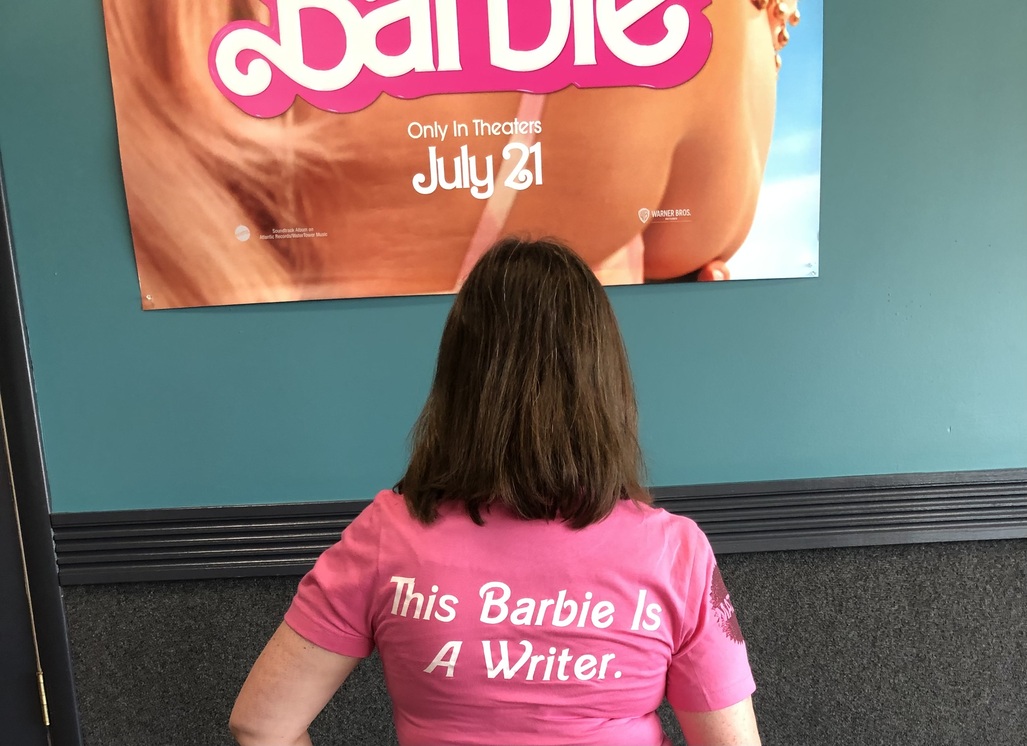
In front of the Barbie movie poster, with a t-shirt that says "This Barbie is a writer" on the back

I Just Bought My First Barbie + My Thoughts on the Barbie Movie

This week, I–a thirty-something year old woman–bought my very first Barbie doll.

I never owned a single Barbie when I was a child. Yet I desperately wanted one. I loved going over to friends’ houses and playing with Barbie dolls, dream houses, and pink cars.

I never asked for a Barbie because I assumed that my parents would be opposed to them and everything Barbie stood for (a sexualized, unattainable, and perhaps undesirable version of reality–clearly they wouldn’t that want that).

Years later, one of my younger sisters had Barbies, and I realized that I should have asked. Maybe a Barbie would have been outside of my family’s budget, but maybe it would have become that coveted Christmas present.

Fast-forward to myself as an adult, and my daughters own dozens of Barbie dolls, several Chelsea dolls, and a few pets. And, lest I forget, a single Ken doll. I have bought Barbies for them and Barbies for birthday presents, as if I am trying to make up for lost time. And I’ve spent many hours playing Barbies with my children. One of my youngest’s favorite versions involves designating half of the Barbies as villains and often includes kidnapping, tying Barbies up with ropes, and all manner of treachery and shenanigans.

Then came the Barbie movie. Not those animated movies that my daughters used to watch that I find supremely annoying, but THE 2023 Barbie movie.

I knew, from the moment the first Barbie teaser trailer dropped, that I would love the Barbie film. After all, 2001: A Space Odyssey is one of my favorite films, and if a director can manage to do a perfect homage, remaking every shot but with baby dolls, then I’m on board for the ride. (I’ll spare you the 1000-word analysis of the opening sequence of 2001…but know that this analysis is ever in my heart.)

Earlier this week, I was feeling very prepared for the Barbie movie:

  • Group of friends to go with? Check.
  • Tickets to opening night? Check.
  • Outfit? Check. (Matching Barbie shirts with customized “This Barbie is…” statements on the back.)
In front of the Barbie movie poster, with a t-shirt that says "This Barbie is a writer" on the back

But I wanted a Margot Robbie Barbie doll. My internal voices, the same voices that led me to not ask for a Barbie, told me:

  • I don’t need a Barbie doll
  • I’m an adult–clearly I don’t need a Barbie doll
  • This is a waste of money
  • I’m going overboard for this movie, when I’m not even a Barbie superfan

I decided not to listen to the voices. I bought the Barbie doll.

And then I brought my very own Barbie–my very first Barbie–with me to the movie.

The showing was absolutely packed, mostly with women, but also with men and children. And the film was a delight. It was a perfect mix of comedy, cultural references, and simultaneous lighthearted embracing and mocking of fandom and society, mixed with touching, heartfelt moments.

One of the things I’ve struggled with throughout my adult life is a feeling of internal conflict. Of wanting to be many things, but feeling like my wants and desires don’t match up with all the many versions of what the different cultural, social, religious, and family groups I am a part of think I should be. It’s something I’ve tried to work through with therapists, but almost always I feel this internal tension, this sense that I’m not enough, this almost-wish that I could just happily fit into one of the roles that has been prescribed for me, and somehow just feel happy and content in this role. Could I just not want more? Could I just not want something different? Wouldn’t life be better that way?

This movie–Barbie’s journey, Ken’s journey, Gloria’s journey, Sasha’s journey–made me feel less alone. It made me feel like maybe I’m not the only one struggling with this. In fact, this is something everyone faces–especially women. Like Barbie, I can be who I want to be. Like Barbie, I can take on many roles. Like Barbie, there will be challenges and conflict, and the path won’t always be clear. But I can keep trying.

I have no regrets about buying myself a Barbie doll.

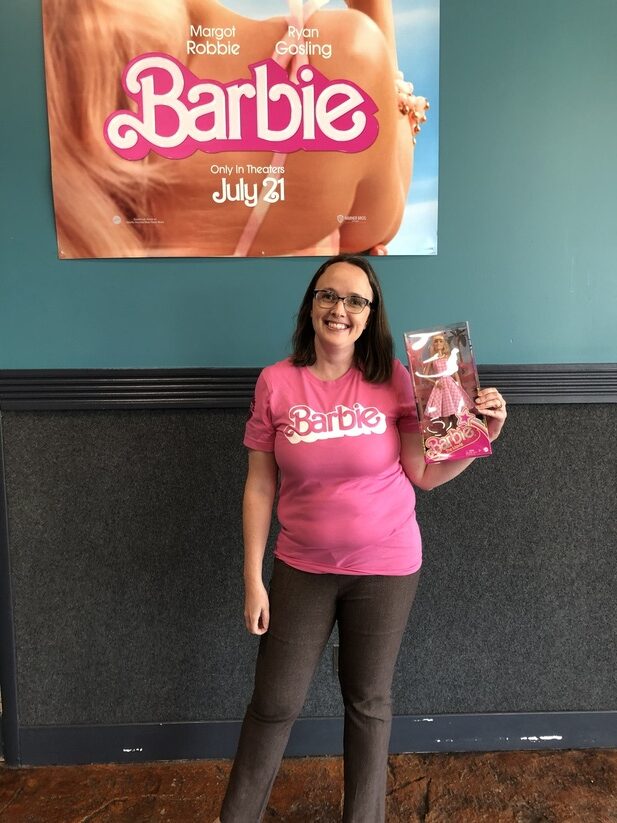
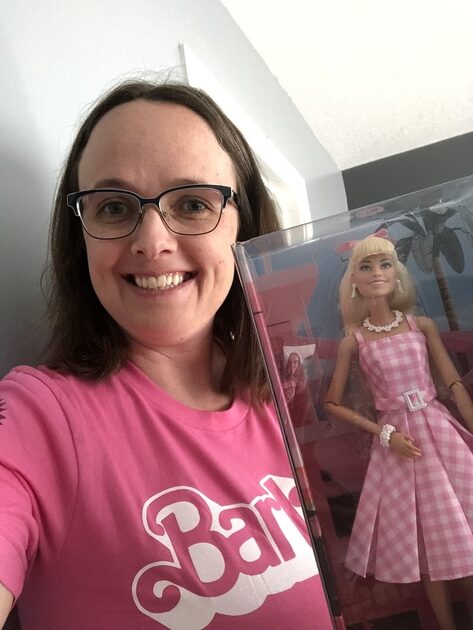
Me with my Margot Robbie Barbie doll
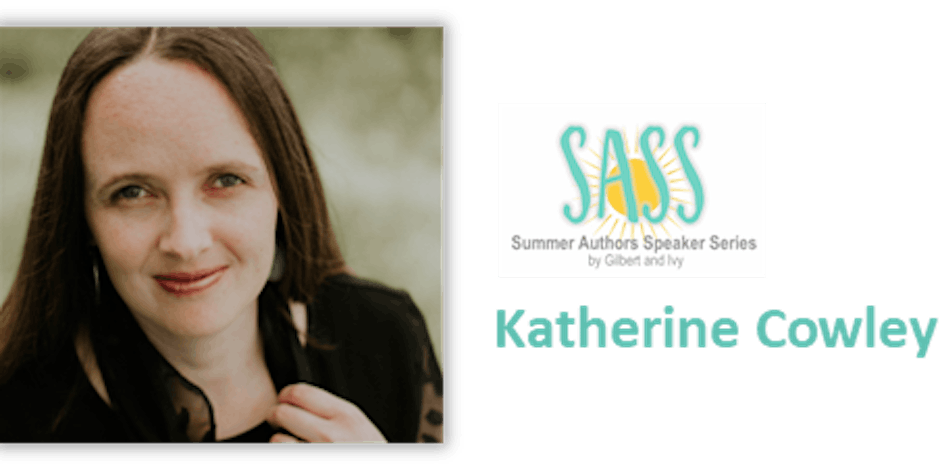
Summer Author Speaker Series: Katherine Cowley at Gilbert and Ivy in Vicksburg, MI

West Michigan Event: Gilbert and Ivy (Vicksburg)

Summer Author Speaker Series: Katherine Cowley at Gilbert and Ivy in Vicksburg, MI

If you’re in Western Michigan and looking for some great author events this summer, Vicksburg, MI has a charming new bookstore, Gilbert and Ivy, and they have a summer speaker series.

I’ll be there on June 28th from 5:30-7:00 p.m., talking about my Mary Bennet series, answering everyone’s questions, and leading a free letterlocking activity (Lady Trafford taught Mary how to properly lock her letters; now I’ll teach you).

If you’re interested in attending, you’re encouraged to RSVP on Eventbrite (Gilbert and Ivy).