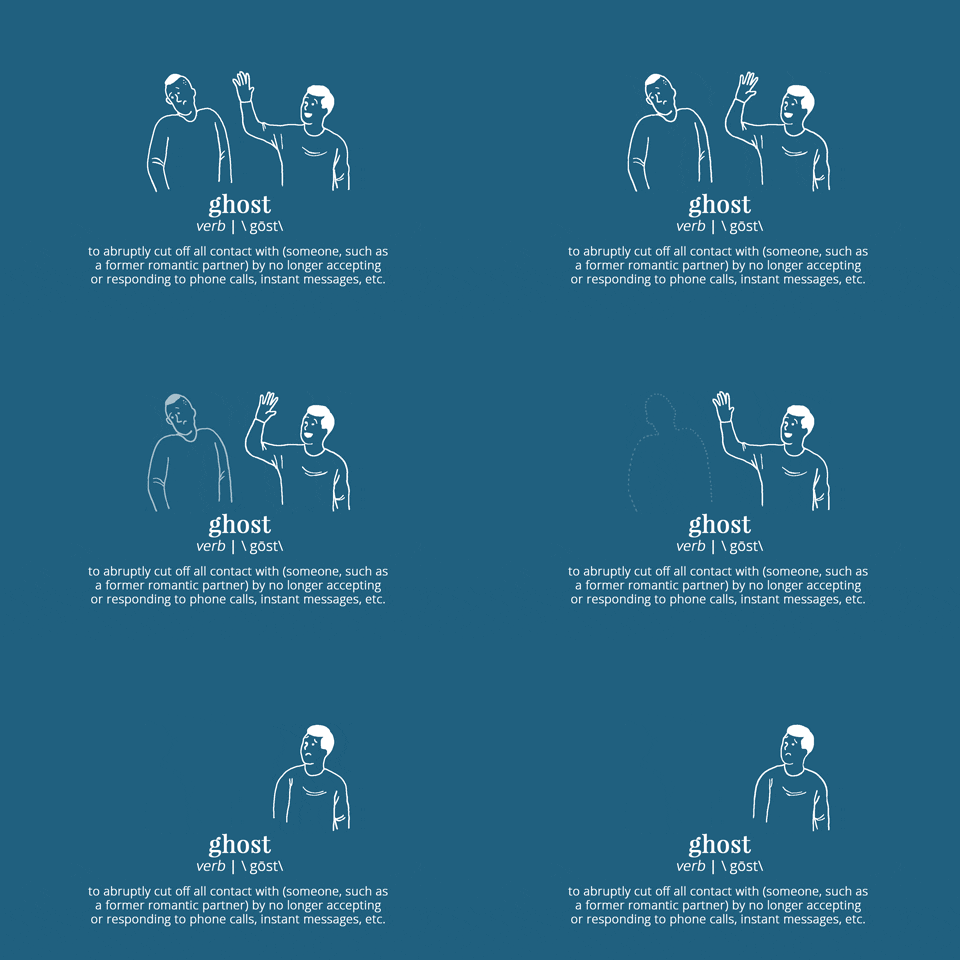
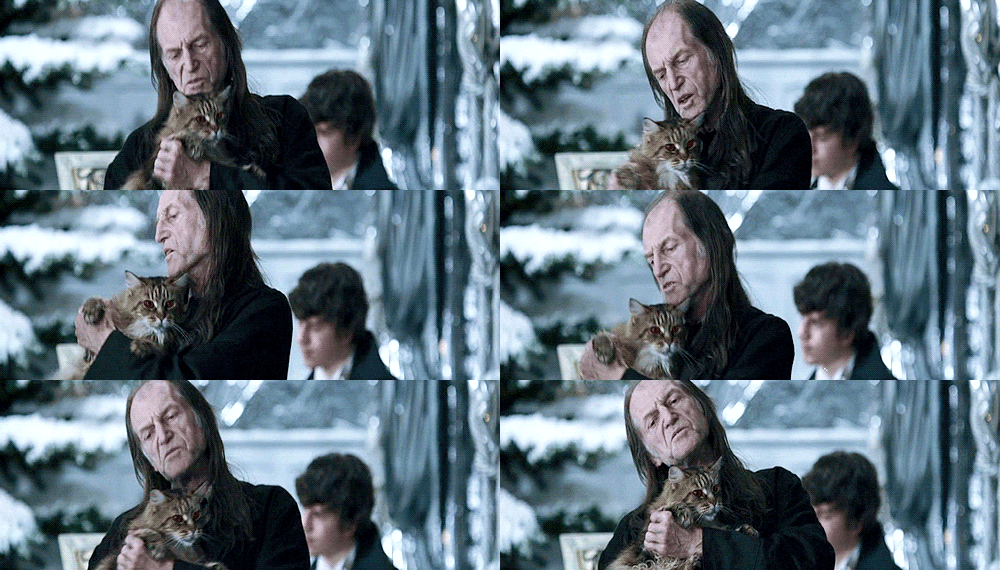
Definition of “ghost” from Merriam-Webster dictionary.
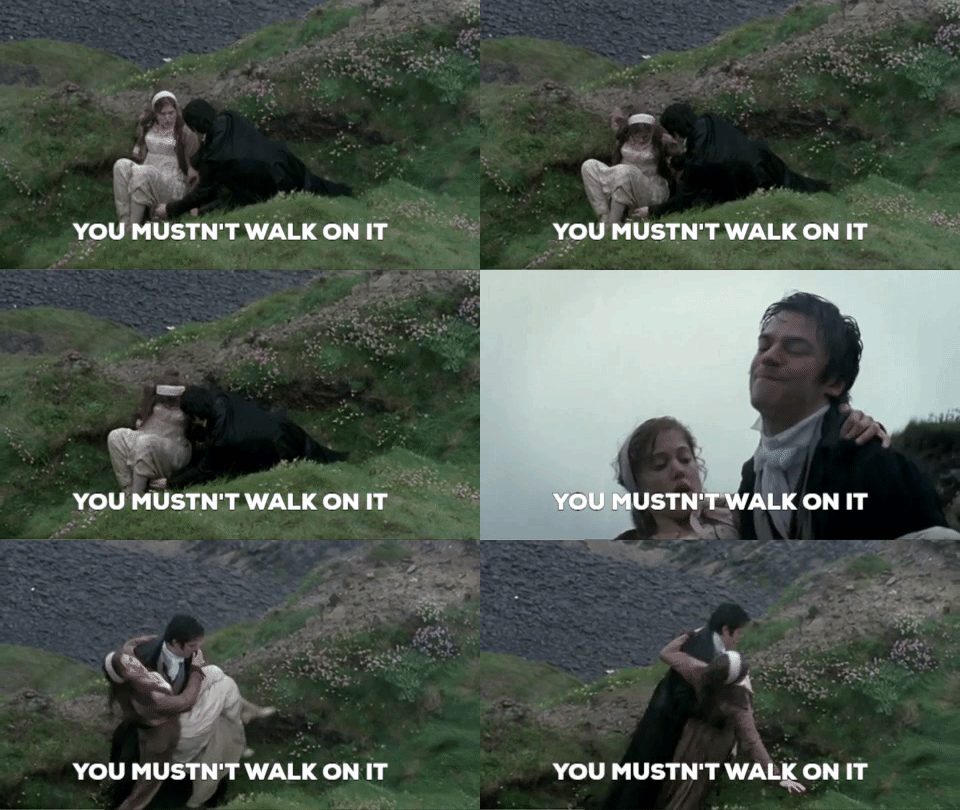
- It turns out that he has previously gotten a teenage girl pregnant
- He marries another woman for financial reasons.
His Motives for Antagonistic Behavior
In the last two lessons I talked about different motives that Jane Austen gives her antagonists in Sense and Sensibility—selfish motives, negative motives, positive motives, and mixed or neutral motives. Having understandable motives, whether or not they are ones we support, give a character depth and reality. Willoughby possesses each of these types of motives:
- Selfish motives: Sleeping with an easily influenced teenage girl
- Negative motives: Disregarding propriety and societal expectations, playing with Marianne’s affections
- Positive motives: helping Marianne when she has fallen, realizing that he has genuine interest in her and trying to find a way to make a relationship possible
- Neutral motive: seeking financial stability/security: (in and of itself, the need for financial security is not a negative thing; it’s much more complex than that—many of Austen’s characters grapple with this, including Marianne and Elinor Dashwood in Sense and Sensibility, and, in her other novels, the Bennet sisters, Charlotte Collins, Anne Elliot, Jane Fairfax, and Fanny Price.)
Letting Willoughby Tell His Story
I took a graduate-level class on Jane Austen, and we spent a fair amount of time discussing a particular Willoughby scene that is not included in a number of adaptations.
This scene occurs when Marianne is extremely ill, due to a combination of heartbreak and spending too long in the cold and the rain (deathly illness due to these causes seems to be an occupational hazard of being a young woman in the Regency period).
Willoughby comes in the middle of the night and insists on speaking to Elinor. To his credit, he is extremely worried about Marianne’s health, and is grateful she has taken a turn for the better. At first, Elinor thinks that he must be intoxicated, but he is not, and he insists on Elinor listening to him, which she is not inclined to do:
“Mr. Willoughby, you ought to feel, and I certainly do—that after what has passed—your coming here in this manner, and forcing yourself upon my notices, requires a very particular excuse.—What is it, that you mean by it?”—
“I mean,”—said he, with serious energy—“if I can, to make you hate me one degree less than you do now. I mean to offer some kind of explanation, some kind of apology, for the past; to open my whole heart to you, and by convincing you, that though I have always been a blockhead, I have not been always a rascal, to obtain something like forgiveness from Ma—from your sister.”
Jane Austen then gives Willoughby page after page after page to explain himself. He admits all his terrible motives, including:
“Careless of her happiness, thinking only of my own amusement, giving way to feelings which I had always been too much in the habit of indulging, I endeavoured, by every means in my power, to make myself pleasing to her, without any design of returning her affection.”
We see his angst, his attempts to justify himself, his pride and selfishness, his arguments good and bad. And we see glimpses of redemption:
“The happiest hours of my life were what I spent with her, when I felt my intentions were strictly honorable, and my feelings blameless.”
Ultimately, Elinor comes to understand him a little, and to truly understand a person is a token of forgiveness, a gift of humanity for them and for the reader:
[Elinor’s] thoughts were silently fixed on the irreparable injury which too early an independence and its consequent habits of idleness, dissipation, and luxury, had made in the mind, the character, the happiness, of a man who, to every advantage of person and talents, united a disposition naturally open and honest, and a feeling, affectionate temper. The world had made him extravagant and vain—Extravagance and vanity had made him cold-hearted and selfish. Vanity, while seeking its own guilty triumph at the expense of another, had involved him in a real attachment, which extravagance, or at least its offspring, necessity, had required to be sacrificed. Each faulty propensity in leading him to evil, had led him likewise to punishment.
Ultimately, Elinor expresses her forgiveness to Willoughby. It’s a fascinating scene, worth reading its entirety. In general, Jane Austen’s antagonists are some of her most memorable characters, because they are full of depth, complexity, and nuance. Often we come to understand their motives and character quite well, but here, Austen gives him a gift not often given to antagonists: he is able to fully tell his own story. Unless the antagonist is a viewpoint character, it’s very uncommon for an antagonist to receive this opportunity. The ability for Willoughby to admit his faults doesn’t make his choices better. But it does force us as readers to truly walk in Willoughby’s shoes, which enhances the themes and tensions of the novel.
Redemptive Qualities
While most of the time an antagonist won’t have a chance to fully tell their story, in many cases we get a glimpse of their story. Their motives—positive, negative, and neutral—should be understandable, even if we don’t always agree with them. And at times, an antagonist should possess some redemptive qualities (for instance, in Pride and Prejudice, Lady Catherine de Bourgh is good and generous to Mr. Collins). This helps make the antagonists complex, nuanced, and memorable.


 https://www.katherinecowley.com/wp-content/uploads/2025/12/Jane-Austens-250th.png
576
1024
Katherine Cowley
http://www.katherinecowley.com/wp-content/uploads/2024/12/Katherine-Cowley-1.png
Katherine Cowley2025-12-16 11:25:312025-12-17 11:27:05Jane Austen’s 250th Birthday and How Austen Wrote Birthday and Holiday Greetings
https://www.katherinecowley.com/wp-content/uploads/2025/12/Jane-Austens-250th.png
576
1024
Katherine Cowley
http://www.katherinecowley.com/wp-content/uploads/2024/12/Katherine-Cowley-1.png
Katherine Cowley2025-12-16 11:25:312025-12-17 11:27:05Jane Austen’s 250th Birthday and How Austen Wrote Birthday and Holiday Greetings